Agentic AI is everywhere in 2026. Every software company is using the term. Most are using it wrong.
For operations leaders trying to cut through the noise, here's a plain-language breakdown of what agentic AI actually means, what it can realistically do inside a business operations context, and how to evaluate whether a vendor is actually delivering it or just labeling something old with a new name.
What Agentic AI Actually Means
Traditional automation follows rules. If X happens, do Y. It's predictable, reliable, and limited.
Agentic AI goes a step further. An AI agent can take a goal, break it into steps, execute those steps across multiple systems, and adjust its approach based on what it encounters—without a human directing every decision.
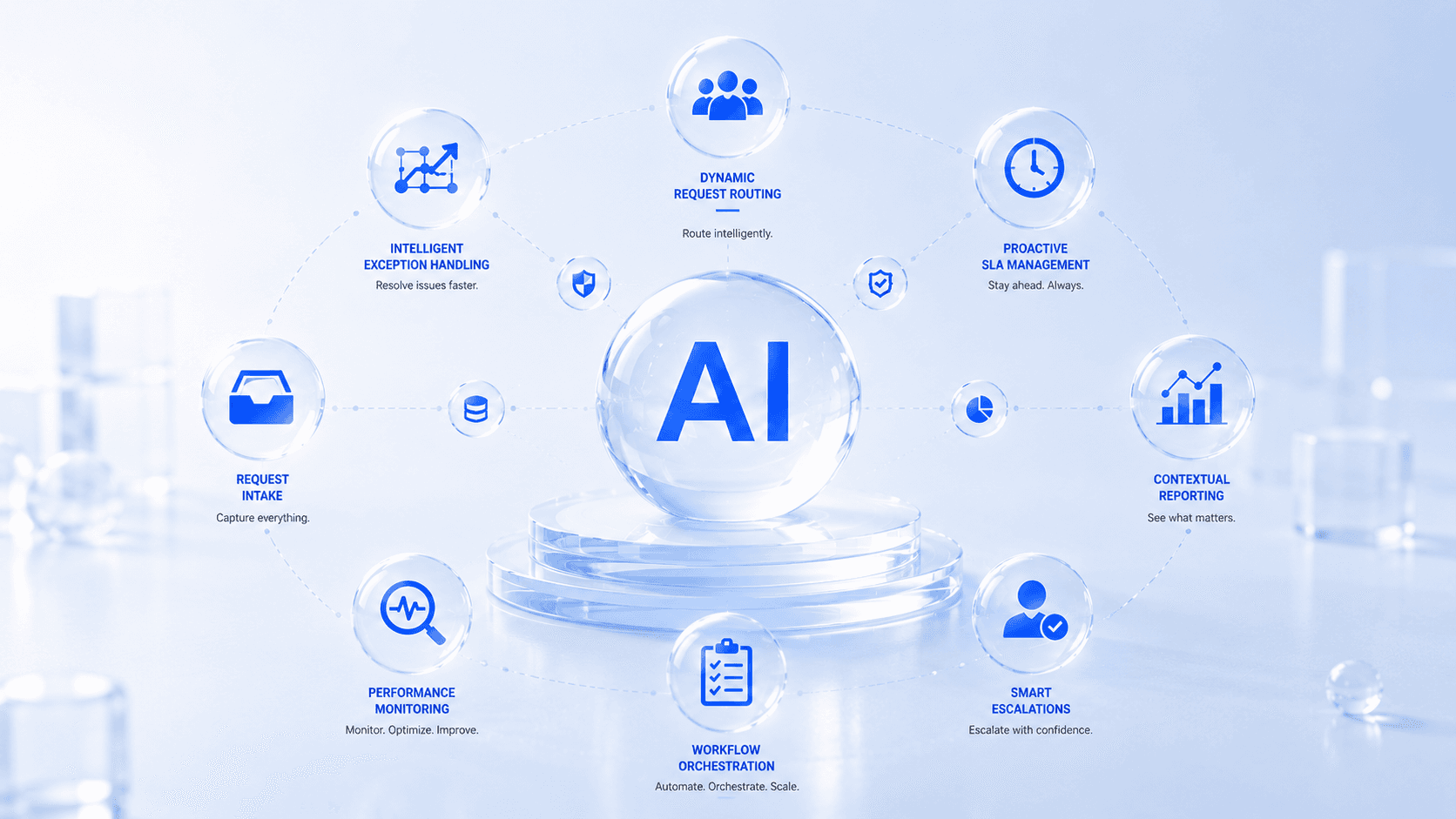
In an operational context, this means an AI agent could receive an incoming request, classify it, route it to the right team, monitor its progress, send a reminder when it's at risk of missing SLA, escalate it to a manager if unresolved, and summarize the outcome—all without any manual involvement.
That's not science fiction. That's what properly designed agentic systems are doing in operations teams right now.
Agentic AI vs. Basic Automation: The Practical Difference
Basic automation executes fixed instructions. Agentic AI makes contextual decisions.
Example: a basic automation sends a reminder when a ticket has been open for 24 hours. An agentic system looks at the ticket type, the client's history, the assigned team member's current workload, and the SLA definition—and decides whether to send a reminder, escalate to a manager, or reassign the ticket entirely.
The distinction matters because real operations are rarely clean. Exceptions happen constantly. A fixed-rule automation breaks down at the edges. An agentic system handles them.
For operations teams managing hundreds of requests per week, the difference between basic automation and agentic AI translates directly into fewer escalations, fewer missed SLAs, and fewer manager interventions.
Where Agentic AI Adds the Most Value in Operations
The highest-value applications of agentic AI in business operations fall into four areas:
1. Dynamic request routing
Routing decisions based on real-time workload, not fixed rules. When a team member is at capacity, requests route elsewhere automatically—without a manager intervening.
2. Proactive SLA management
The system doesn't just track SLAs—it predicts breach risk based on request complexity, team workload, and historical resolution patterns and acts before the breach occurs.
3. Intelligent exception handling
When a request doesn't match a standard workflow, an agentic system can identify the closest match, flag the exception, and route it appropriately rather than losing it.
4. Contextual reporting
Instead of generating a static weekly report, an agentic system can identify patterns, flag anomalies, and surface insights that a human reviewing a spreadsheet would likely miss.
The Honest Limitations of Agentic AI in 2026
Agentic AI is genuinely powerful. It's also genuinely overhyped by vendors who describe basic workflow tools as 'agentic.'
Here's what to watch for:
Real agentic AI requires well-structured data and clear workflow definitions. If your operations data is messy, your process ownership is unclear, or your SLAs aren't defined, agentic AI will not fix those problems—it will surface them faster.
Agentic AI also requires human oversight, not human replacement. The goal is to remove the manual overhead from routine decisions, not to remove human judgment from complex ones. The best operational systems in 2026 are designed with clear escalation paths, with AI handling routine tasks and humans handling exceptions.
Any vendor telling you their system will fully automate your operations with no human involvement is either oversimplifying or overselling.
How to Evaluate Whether Your Operations Are Ready for Agentic AI
Before investing in agentic AI capabilities, answer these questions:
Are your SLAs defined and measured consistently?
Do you have clear ownership for each request type?
Is your intake data clean and structured enough for AI to classify?
Are your escalation paths documented?
If the answer to most of these is no, the first investment isn't agentic AI — it's operational structure. Agentic AI compounds good systems. It doesn't create them.
At GenRes, our operational audit process maps exactly this: where your operations are structured enough to benefit from AI and where foundational work needs to happen first. The result is a realistic implementation plan — not an AI sales pitch.